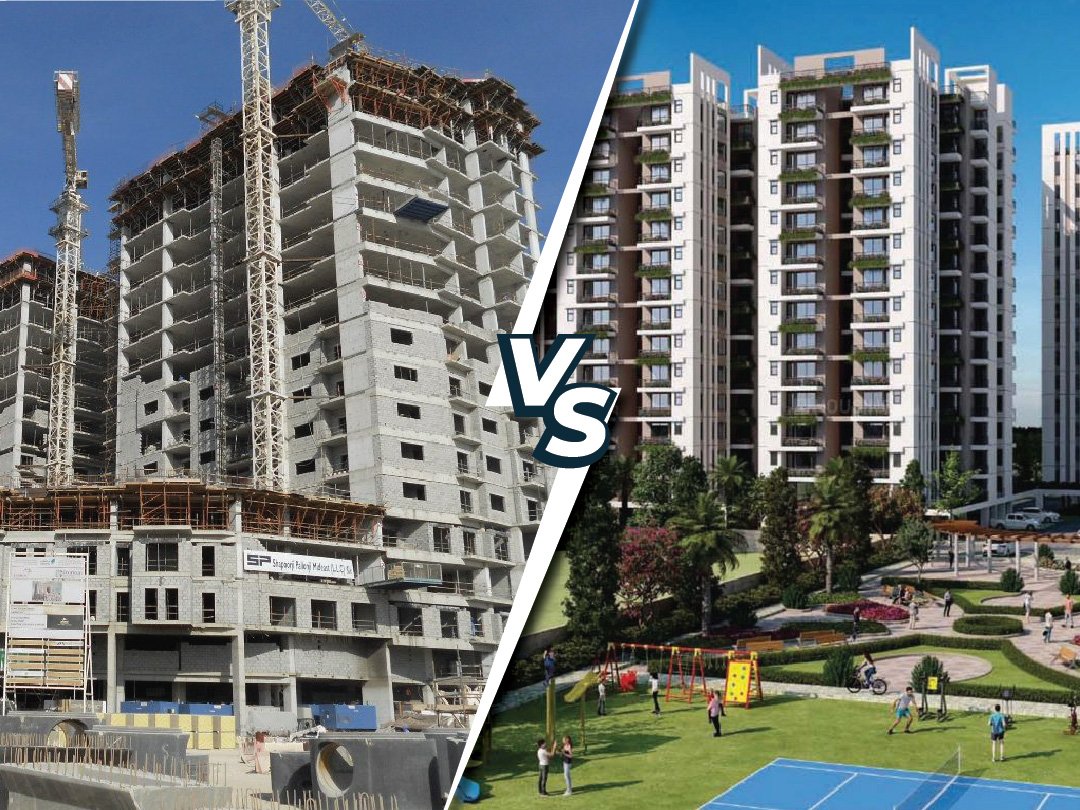
So you’ve narrowed down your budget, picked a locality, maybe even shortlisted a couple of builders — and now you’re stuck on this one question. Under construction vs ready to move property, which one should you actually go for?
I get asked this a lot, and honestly, there’s no one-size-fits-all answer. A young couple buying their first home has very different priorities than someone who’s relocating next month for a job. Both options have real trade-offs — money, time, risk, all of it. Let’s break it down properly, the way I’d explain it to a friend over chai, not a textbook.
What Does “Under Construction” Actually Mean?
An under-construction property is exactly what it sounds like — the building isn’t finished yet. You’re buying based on a floor plan, a brochure, and a lot of trust in the developer.
Direct answer: An under-construction property is a home still being built, sold on the basis of approved plans and a promised possession date, usually priced lower than a completed unit in the same project or locality.
Builders usually price these units 10-20% cheaper than a ready flat in the same area. Why? Because you’re taking on the risk of delays, quality issues, and the uncertainty of “will this actually get finished on time.” In Jaipur’s outer belts — think Ajmer Road extension or parts of Jagatpura — I’ve seen under-construction 2BHKs go for ₹35-40 lakh, while a ready unit just a kilometre away in a completed society was pushing ₹50 lakh plus.
Payment here typically follows a construction-linked plan. You pay in instalments as the builder hits milestones — foundation, slab, brickwork, and so on. This actually helps cash flow for a lot of buyers, since you’re not putting down the full amount on day one.
What Does “Ready to Move” Really Offer?
This one’s simpler. The flat exists. You can walk in, check the tiles, test the taps, and see exactly what you’re paying for.
No guesswork. No “trust me, it’ll look like the brochure.” What you see is what you get, and that alone removes a huge chunk of anxiety from the buying process.
Ready properties cost more, sure. But you also skip years of rent-plus-EMI double payment, which — trust me — adds up faster than people expect.
Price Comparison: Where Does Your Money Go Further?
Direct answer: Under-construction homes are typically 10-25% cheaper than comparable ready-to-move units, but buyers pay 5% GST (or 1% for affordable housing) on under-construction purchases, while ready-to-move properties with a completion certificate attract zero GST.
Let’s put real numbers on this. Say a 2BHK ready flat in a decent Jaipur suburb costs ₹55 lakh. An equivalent under-construction unit in a nearby upcoming project might list at ₹45 lakh.
Looks like a clear win for under-construction, right? Not so fast.
- On that ₹45 lakh under-construction flat, you’d pay 5% GST — that’s ₹2.25 lakh extra, gone, just like that.
- Ready-to-move properties with an occupancy certificate are GST-exempt entirely.
- Factor in registration, stamp duty (around 6% in Rajasthan for most buyers), and the gap narrows quite a bit.
So the “cheaper” option isn’t always cheaper once you add everything up. I’ve watched buyers get excited about the base price and then feel blindsided at the GST line item during payment. Do the full math before you fall in love with a number.
Risk Factor: Delays, Defaults, and Builder Reputation
This is where under-construction property genuinely worries me. Projects get stuck. Approvals get delayed. Sometimes builders run into cash flow trouble and construction just… stops.
RERA has helped, no doubt. Every state now has a regulatory authority, and developers are legally required to register projects and disclose timelines. But RERA doesn’t build the building for the builder — it just gives you legal recourse when things go wrong, which, let’s be honest, is a slow and tiring process for most people.
A few things I’d actually check before signing anything:
- RERA registration number and whether the project is actually listed on the state RERA website (not just claimed verbally by the sales team)
- The builder’s track record — how many of their past projects were delivered on time, and by how much did the delayed ones slip?
- Litigation history — a quick search or a chat with a local property lawyer can save you a massive headache later
- Current construction stage versus what was promised for this quarter
Ready-to-move property sidesteps almost all of this. The building is standing. There’s no “what if” hanging over your possession date.
[link to related guide on checking RERA registration status here]
Customization and Personal Touch
Here’s something people don’t talk about enough. With an under construction property, you often get a say in things — tile choice, some layout tweaks, sometimes even minor structural changes if you catch it early enough in the build.
I bought fittings-stage flexibility into my own flat years ago and honestly, being able to pick the modular kitchen layout before the walls went up saved me a renovation headache later.
Ready-to-move homes don’t offer this. What’s built is built. Want to move a wall? That’s a full renovation project, with dust, noise, and probably a fight with your spouse about the budget.
Rental Income and Immediate Use
If you’re an investor chasing rental yield, this section matters a lot.
Direct answer: Ready-to-move properties let you start earning rental income or move in immediately, while under-construction properties typically take 2-5 years to deliver, during which you earn nothing but pay EMIs — a real opportunity cost worth calculating before you commit.
Picture a small business owner in Jaipur who needs to relocate his family for his kid’s school admission next year. An under-construction flat with a “possible” 2027 handover just doesn’t work for him, no matter how good the price looks. Ready-to-move is really his only sane option.
Compare that to an investor with a 7-8 year horizon who doesn’t need the property immediately — for them, buying under-construction at a lower entry price and letting the value appreciate by possession time can work out beautifully. It’s really about your own timeline, not some universal rule.
Loan and EMI Considerations
Banks treat these two differently, and it genuinely affects your monthly cash flow.
For under-construction property, most lenders disburse the loan in tranches, matching the builder’s construction stages. You only pay interest (pre-EMI) on the amount actually disbursed, which keeps early payments lower. Once possession happens, full EMI kicks in.
For ready-to-move homes, the entire loan amount is usually disbursed upfront, and full EMI starts right away — no gradual ramp-up.
- Under-construction: lower initial outgo, but you might be paying rent AND pre-EMI simultaneously if you haven’t moved yet
- Ready-to-move: higher immediate EMI, but no double payment since you can move in and stop paying rent
I’d say if you’re currently renting and hate the idea of paying twice, ready-to-move is the less stressful route financially, even if the sticker price is higher.
Resale Value and Appreciation Potential
Under-construction properties, statistically, tend to see sharper appreciation between booking and possession — especially in developing corridors. Buy early in a project’s lifecycle in an area that’s genuinely growing, and by handover time your property could be worth noticeably more than what you paid.
Ready-to-move properties appreciate too, obviously, just usually at a steadier, less dramatic pace since the “growth corridor” premium has often already been priced in.
That said — and this is just something I’ve noticed over the years — appreciation on under-construction projects depends heavily on the area actually developing as promised. Metro line delayed by three years? Your appreciation story delays with it. It’s not a guaranteed formula, whatever some sales brochures imply.
[link to related article on best areas for property appreciation in Jaipur here]
Legal Documentation and Due Diligence
Whichever route you pick, don’t skip this part. Ever.
For ready to move homes, check the occupancy certificate (OC), completion certificate (CC), and make sure the property tax records and utility connections are clean and transferred properly.
For under-construction, dig into the approved building plan, land title documents, RERA registration, and the payment schedule tied to construction milestones — never a payment schedule tied purely to time, since that gives the builder zero accountability for actual progress.
Honestly? A lot of buyers skip a lawyer to “save money” on this step. That’s one of the costliest shortcuts I’ve seen people take in real estate.
FAQs
Is under-construction property cheaper than ready-to-move in 2026? Generally yes, by around 10-25%, but you need to add GST (5% or 1% for affordable housing), which ready-to-move properties don’t attract. Once you factor that in, the gap shrinks quite a bit.
Is it safe to buy under-construction property in India? It’s safer now than it used to be, mainly because of RERA. But “safer” doesn’t mean risk-free — always verify the RERA registration, builder history, and current construction stage before booking.
Which is better for home loan tax benefits — under construction or ready to move? With ready-to-move, you get Section 24(b) interest deduction benefits starting immediately after purchase. With under-construction, pre-construction interest is deductible only after possession, spread over 5 years — so ready-to-move gives you tax benefits sooner.
Can I negotiate price on ready-to-move property? Yes, and often more than people expect, especially on unsold inventory that’s been sitting for a while. Builders sometimes prefer to move old stock quickly rather than carry holding costs.
How long does an under-construction property typically take to complete? Anywhere from 2 to 5 years depending on project size, approvals, and the builder’s execution track record — always ask for the RERA-declared completion date rather than relying on verbal promises from the sales team.
Does GST apply to resale ready-to-move flats? No. GST only applies to under-construction properties bought directly from a developer. Resale of any property, ready or otherwise, between two individuals doesn’t attract GST.
Final Word
There’s genuinely no universal winner in the under construction vs ready to move property debate — it depends on what you need right now versus what you’re willing to wait for. Need to move in soon, want price certainty, or hate risk? Go ready-to-move. Have a longer runway, want a lower entry price, and are willing to do your homework on the builder? Under-construction can work out well too.
Whatever you pick, don’t rush it. Check the paperwork, verify RERA status, actually visit the site (or the under-construction site, even if it’s just a foundation), and talk to at least two or three existing residents or buyers in that project before signing. That one conversation has saved more buyers from bad decisions than any amount of online research ever could.