Building a farmhouse, a hill-station cottage, or maybe extending a sloped-roof section on your city home? At some point the metal roof vs shingles question comes up, and honestly, most people just go with whatever the local contractor pushes.
That’s not always the right call. I’ve seen homeowners in Himachal go with shingles because “that’s what everyone here uses,” only to redo the whole roof nine years later. I’ve also seen metal roofs installed in coastal Goa that started rusting within five years because nobody accounted for the salt air. Context matters here — a lot more than people assume.
This one’s not a simple “metal wins” or “shingles win” answer. It genuinely depends on your climate, your budget, and how long you actually plan to stay in that property. Let’s get into the real numbers.
Lifespan Comparison: The Core Question
Direct answer: Metal roofing typically lasts 40-70 years depending on the material, while asphalt or composite shingles last 15-25 years on average — meaning a metal roof can outlast two to three shingle roof replacements over the same period.
That’s the headline number, and it’s the one everyone quotes. But lifespan on paper and lifespan in your specific climate are two very different things.
- Galvalume or aluminum metal roofing: 40-60 years, holds up well even in harsh sun
- Steel roofing (uncoated or poorly coated): can drop to 20-25 years if it’s near coastal areas or high humidity zones
- Asphalt shingles: 15-20 years typically, though premium architectural shingles can push 25-30
- Wood shingles: 20-25 years if maintained, less in high-rainfall regions since they’re prone to rot
So yes, metal generally wins on raw lifespan. But “generally” is doing a lot of work in that sentence.
Why Metal Roofing Often Outlasts Shingles
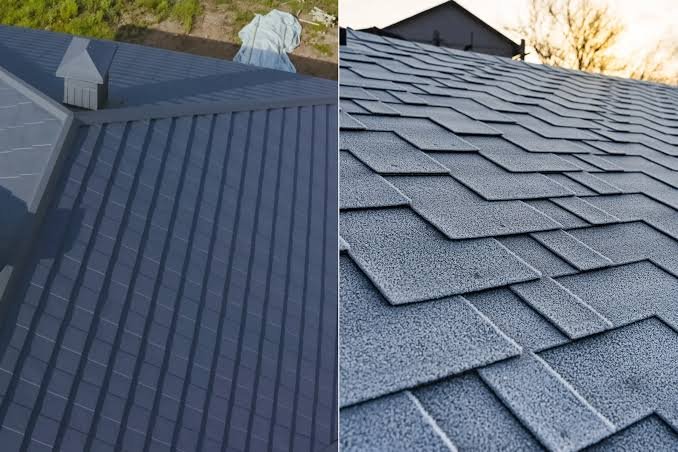
Metal simply doesn’t degrade the way asphalt does. Shingles are essentially layers of fiberglass mat coated in asphalt and mineral granules — over time, UV exposure breaks down that coating, granules wash off, and the shingle becomes brittle.
Metal doesn’t have that granule-loss problem. It can dent, sure, and it can rust if the coating fails, but the base material itself doesn’t crumble the way asphalt does under sun exposure.
I’ve noticed something interesting on a few Rajasthan sites I’ve visited — metal roofs there hold up remarkably well precisely because it’s dry heat, not humid heat. Rust needs moisture to really take hold, and our summers, brutal as they are, are at least dry. Coastal states don’t get that advantage.
Cost Comparison — Upfront vs Long-Term
Direct answer: Shingle roofing costs less upfront, roughly ₹80-150 per sq ft installed, compared to metal roofing at ₹150-350 per sq ft — but factoring in a 40-50 year lifespan, metal roofing often works out cheaper per year of use.
Let’s actually run the numbers on a 1500 sq ft roof.
Shingles at ₹120/sq ft average comes to around ₹1.8 lakh, lasting maybe 18 years. Over a 54-year period (three replacement cycles), you’d spend roughly ₹5.4 lakh, not counting labour cost increases over time, which — let’s be real — never stay flat.
Metal roofing at ₹220/sq ft on that same area comes to ₹3.3 lakh, lasting 50+ years. One installation, no replacement needed in that same 54-year window.
Metal costs more today. But stretched over decades, it’s often the cheaper option. Whether that math matters to you depends entirely on how long you plan to own the property.
Maintenance Requirements — Which Roof Demands More Attention?
Shingles need more regular upkeep than most people expect. Has your roofer ever mentioned granule loss to you? If not, ask — it’s the first visible sign of shingle aging, and it happens gradually enough that homeowners often miss it until there’s an actual leak.
Shingle maintenance basics:
- Check for curling, cracking, or missing shingles after every monsoon
- Clear debris and moss buildup, especially in shaded roof sections
- Re-seal flashing around chimneys or vents every few years
Metal roof maintenance basics:
- Inspect fasteners and seams annually, since loose screws are the most common failure point
- Touch up protective coating if scratches or chips appear, particularly near coastal zones
- Check for minor dents after hailstorms, mostly cosmetic but worth tracking
Honestly, metal wins on the maintenance front too, once it’s properly installed. Fewer moving parts to worry about, fewer surprise repairs.
[link to related guide on monsoon-proofing your roof here]
Noise, Heat, and Comfort Factors
This is where a lot of people get metal roofing wrong, purely based on old assumptions. Yes, uninsulated metal roofing gets loud during heavy rain — genuinely loud, like a drumline overhead.
But that’s a solvable problem. Proper insulation, or an underlayment during installation, cuts that noise down significantly. Skip it to save cost, and you’ll regret it the first heavy monsoon night.
On heat — this one’s counterintuitive. Reflective or coated metal roofing can actually keep interiors cooler than dark asphalt shingles, which absorb and hold heat. Picture a small business owner in Jaipur running a warehouse with a metal roof and proper reflective coating — his indoor temperature during peak May afternoons runs noticeably lower than a neighboring shed with a standard shingle-style covering.
Shingles, on the other hand, are naturally quieter and don’t need extra insulation just to dampen rain noise. That’s a genuine point in their favor, and I won’t pretend otherwise.
Weather Resistance — Which Holds Up Better in Indian Climates?
Depends entirely on region, and this is where a blanket recommendation just doesn’t work.
- Coastal areas (Mumbai, Goa, Chennai): Salt air corrodes untreated metal fast. If you’re going metal here, invest in a proper aluminum or Galvalume coating — cheap steel roofing will rust within a handful of years.
- High rainfall zones (Kerala, Assam, parts of the Northeast): Metal sheds water efficiently and resists moss growth better than shingles, which tend to trap moisture underneath over time.
- Hot, dry regions (Rajasthan, Gujarat): Both perform reasonably, but metal’s heat-reflective properties give it a slight edge for energy efficiency.
- Hail-prone or hill areas (parts of Himachal, Uttarakhand): Metal can dent under severe hail, though it rarely fails structurally. Shingles can crack and lose granules from repeated hail impact.
Ask your contractor specifically about your region’s weather pattern, not just a general recommendation they give everyone.
Installation and Repair Considerations
Shingle installation is generally quicker and more widely understood by local contractors across India, simply because it’s been around longer in residential construction here.
Metal roofing installation demands more precision — improper seam sealing or fastener spacing is exactly why some metal roofs fail early and get unfairly blamed as “not durable.” It’s rarely the material’s fault. It’s usually the installer’s.
Repairs differ too. A damaged shingle is easy to replace individually, cheap and quick. A damaged metal panel sometimes requires replacing a larger section, depending on the panel system used, which can be pricier for a single repair even though overall lifetime costs stay lower.
FAQs
Is metal roofing more expensive than shingles in India? Upfront, yes — metal costs roughly 1.5 to 2.5 times more per sq ft than standard shingles. Over a 40-50 year period though, metal often costs less per year because you’re avoiding multiple shingle replacements.
Does metal roofing rust in Indian coastal climates? Untreated or poor-quality steel can rust fairly quickly near the coast. Going with aluminum or a properly coated Galvalume sheet solves most of this issue, though it does add to the upfront cost.
Which roof type is quieter during rain — metal or shingles? Shingles are naturally quieter without any extra work. Metal roofs get loud during heavy rain unless properly insulated or fitted with an underlayment, which is honestly worth the extra cost.
Can I install metal roofing over existing shingles? In many cases yes, provided the existing structure can handle the added weight and the shingles aren’t already damaged or rotting underneath. Get a structural check done before assuming this works for your roof.
Which roofing option adds more resale value to a home? Metal roofing is increasingly seen as a premium, low-maintenance feature and can boost resale appeal, especially for buyers planning to hold the property long-term. Shingles are more standard and expected, so they don’t add the same premium.
How do I decide between metal roof vs shingles for my specific home? Consider how long you plan to stay in the property, your local climate, and your upfront budget. Short-term ownership or tight budget usually favors shingles; long-term ownership and harsh climates usually favor metal.
Conclusion
There’s no universal winner in the metal roof vs shingles debate — it really comes down to your timeline, your region, and how much you’re willing to spend today versus over the decades ahead. Metal wins on raw lifespan and long-term cost. Shingles win on upfront affordability and easier local repairs.
If you’re still unsure, get quotes for both options from a contractor familiar with your specific region’s weather, not just a generic estimate. Compare the 20-year cost projection, not just the installation price — that single comparison usually makes the decision a lot clearer than any general advice ever could.