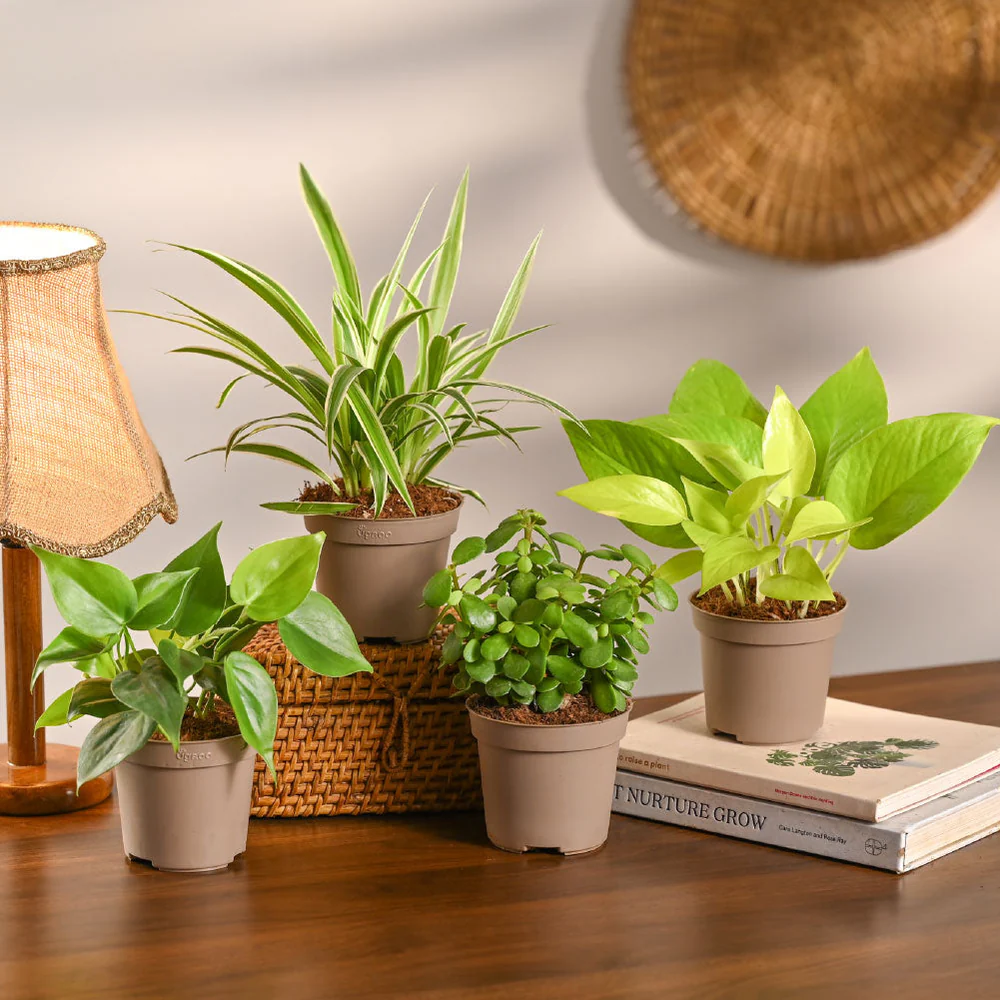
Ever walked into a friend’s apartment and noticed how much fresher it felt, even though nothing looked particularly different? Chances are there were a few air purifying indoor plants quietly doing their job in the corner. Not every plant on Pinterest with a “purifies air!” caption actually does much, though — some of it’s genuine, some of it’s just marketing dressed up as science. I’ve kept plants in every apartment I’ve lived in, killed a fair few of them too, and learned which ones are worth the effort and which are basically decoration. Let’s sort the real research from the noise.
What Does “Air Purifying” Actually Mean for a Plant?
Direct answer: Air purifying indoor plants absorb certain airborne toxins like formaldehyde, benzene, and trichloroethylene through their leaves, then break these compounds down through their root systems with the help of soil microbes. The most cited research here comes from NASA’s 1989 Clean Air Study.
That NASA study gets quoted constantly, and for good reason — it’s still the foundation most “best air purifying plants” lists are built on. But here’s the thing people conveniently skip: it was conducted in sealed lab chambers, not in an actual living room with normal airflow.
So do these plants genuinely help indoors? To a degree, yes. Just don’t expect a single peace lily to replace an air purifier in a smoky Delhi winter. Has that expectation ever let someone down? Probably more often than not.
Snake Plant — The One That’s Nearly Impossible to Kill
If you’ve killed every plant you’ve ever owned, start here. Genuinely.
The snake plant (Sansevieria) is one of the few plants that releases oxygen at night instead of absorbing it, which makes it a solid choice for bedrooms. NASA’s research found it effective at removing formaldeyhde and benzene, common in furniture varnish, synthetic fabrics, and cleaning products.
I’ve had the same snake plant for almost four years now. I’ve forgotten to water it for three weeks straight more than once. It’s still alive, still green, still doing its thing on my windowsill.
- Needs watering once every 2-3 weeks
- Tolerates low light well, though it does better with some indirect sunlight
- Costs roughly ₹150-400 for a decent-sized nursery plant in most Indian cities
Peace Lily — Pretty, But Needs a Bit More Attention
Direct answer: The peace lily (Spathiphyllum) is one of the most effective air purifying indoor plants for removing ammonia, benzene, and formaldehyde, according to NASA’s research, but it’s mildly toxic to pets, so keep that in mind if you’ve got a cat wandering around the house.
Those white blooms aren’t just decorative — they’re actually a genuine indicator of the plant’s health. When a peace lily is thirsty, the leaves droop dramatically, almost theatrically, then perk right back up within hours of watering. It’s honestly one of the more communicative plants I’ve owned.
Keep it out of direct harsh sunlight, water when the topsoil feels dry, and it’ll reward you with blooms every few months.
Areca Palm — Great for Larger Rooms and Offices
Picture a small business owner in Jaipur running a co-working space — she lined the entrance with areca palms instead of an air freshener setup, partly for looks, partly because a few clients specifically asked about air purifying indoor plants for the space. Three years later, they’re still thriving under the office’s tube lighting.
The areca palm is particularly good at humidifying dry indoor air, which matters a lot in air-conditioned Indian offices during summer. It also handles common household toxins reasonably well, though it needs more space than a snake plant or peace lily.
A few practical notes:
- Needs bright, indirect light — doesn’t do well tucked in a dark corner
- Grows fairly large, so it’s better suited to living rooms or office lobbies than small desks
- Costs more upfront, typically ₹500-1500 depending on size, but lasts for years with basic care
Money Plant — The One Almost Every Indian Home Already Has
You’ve probably got one already, or your mother does. The money plant (Epipremnum aureum) is everywhere in Indian households, partly for Vastu reasons, partly because it’s genuinely hard to kill.
It’s decent at filtering out formaldehyde and benzene, and it grows in water alone if you don’t feel like dealing with soil. That’s honestly the main reason it’s so popular — you can stick a cutting in a glass jar on a windowsill and it’ll root within a couple of weeks.
I’ll admit, I’m not entirely convinced its air-purifying reputation matches the hype it gets on Indian home decor pages. It’s a good plant, low maintenance, looks nice trailing off a shelf — but treat the “purifies air” claim as a bonus, not the main reason to get one.
Spider Plant — Ideal for Beginners and Kids’ Rooms
The spider plant (Chlorophytum comosum) is another one that shows up on nearly every air purifying indoor plants list, and it earns the spot honestly.
It’s non-toxic, which makes it a safer pick if you’ve got small kids or pets around the house. NASA’s study found it effective against formaldehyde specifically, and it’s remarkably forgiving if you forget to water it now and then.
What I like most is how it propagates — little “spiderettes” dangle off the mother plant, and you can just snip and repot them. Free plants, essentially, once you’ve got one going.
Rubber Plant — A Bigger Statement Piece That Also Works Hard
For anyone wanting something a bit more visually striking than a spider plant, the rubber plant (Ficus elastica) is worth considering.
Its broad, glossy leaves have a larger surface area, which genuinely does help with absorbing more airborne toxins compared to smaller-leafed plants. It handles lower light better than most people assume too, though growth slows down noticeably in dim corners. [link to related guide about low-light indoor plants here]
Wipe the leaves down with a damp cloth every couple of weeks — dust buildup on the leaf surface actually reduces how effectively the plant can do its job, something a lot of plant guides conveniently skip mentioning.
How Many Plants Do You Actually Need for Noticeable Results?
Direct answer: Research suggests you’d need roughly one plant per 100 square feet of space to see a meaningful, measurable difference in indoor air quality, though this varies based on room ventilation and the specific toxins present.
Realistically, for an average Indian apartment bedroom of around 120-150 sq ft, that’s one to two decent-sized plants, not an entire indoor jungle. More plants definitely won’t hurt, but don’t feel pressured into buying ten just because a blog told you so.
A rough placement guide that’s worked for me:
- Bedroom: one snake plant, since it releases oxygen at night
- Living room: an areca palm or rubber plant, given the larger space
- Kitchen: a spider plant near the window, away from direct stove heat
- Bathroom: peace lily, if there’s enough natural light — they genuinely enjoy humidity
Common Mistakes That Undo the Air Purifying Benefits
Even the best air purifying indoor plants won’t do much if they’re not being cared for properly, and this is where a lot of people go wrong without realizing it.
Overwatering is probably the single biggest killer — more plants die from too much water than too little, in my experience. Root rot sets in quietly, and by the time yellow leaves show up, the damage is often already done.
A few other things worth watching:
- Dusty leaves reduce absorption efficiency significantly over time
- Placing plants too far from any light source basically turns them into slow-dying decoration
- Using chemical-heavy fertilizers can actually offset some of the air-quality benefits you’re going for [link to related guide about natural plant fertilizers here]
FAQ
Do air purifying plants actually work, or is it a myth? They do work to some extent, based on real NASA research, but the effect indoors is much smaller than in sealed lab conditions. Think of them as one small piece of better air quality, not a replacement for ventilation or an air purifier.
Which indoor plant purifies air the fastest? Peace lilies and spider plants tend to show noticeable results relatively quickly, largely because of their leaf surface area and growth rate, though “fast” is relative — this isn’t an overnight fix.
Are air purifying plants safe for homes with pets? Not all of them. Peace lilies and money plants are mildly toxic if pets chew on them, while spider plants and areca palms are considered non-toxic and safer choices.
How many plants do I need to purify a bedroom? Roughly one to two medium-sized plants for an average Indian bedroom is enough to make a measurable difference, based on general research guidelines around plant-to-square-footage ratios.
Can indoor plants replace an air purifier completely? No, not really, especially in cities with heavy outdoor pollution. Plants help with certain specific toxins over time, but they don’t filter particulate matter the way a proper air purifier does.
Which air purifying plants need the least maintenance? Snake plants and money plants are the easiest by far — both tolerate irregular watering and low light, making them ideal if you’ve got a track record of forgetting to care for houseplants.
Conclusion
Air purifying indoor plants genuinely earn their reputation, just not quite to the dramatic degree some blogs promise. Snake plants, peace lilies, and spider plants are solid, research-backed picks that also happen to survive real Indian homes, with real inconsistent watering schedules and real forgetful owners.
Start with just one or two, based on the rooms you spend the most time in, rather than overwhelming yourself with a dozen plants at once. Notice how the space feels after a month, and go from there.