A residential swimming pool is a central feature for summer recreation, physical fitness, and outdoor entertaining. However, managing open water access is a fundamental responsibility for any property owner. Designing an effective barrier around a swimming pool requires balancing strict safety compliance with visual appeal. Rather than disrupting the flow of a backyard layout with industrial barriers, modern landscape architecture integrates protective structures directly into hardscape environments. Understanding building code requirements, material durability, structural integration, and transparent design techniques enables homeowners to establish a secure pool perimeter that enhances property value without sacrificing aesthetic elegance.
Understanding Safety Compliance and Local Pool Codes
Before selecting materials or planning aesthetic details, pool barriers must meet specific legal and engineering standards. Municipalities enforce pool enclosure regulations to prevent accidental access, particularly by young children and pets. While exact codes vary by jurisdiction, standard residential safety guidelines mandate specific physical dimensions and access controls.
Key structural requirements generally include:
- Minimum Barrier Height: Enclosures typically require a minimum vertical height of 48 to 60 inches measured from the exterior ground surface.
- Maximum Ground Clearance: The space between the bottom of the enclosure and the ground surface should not exceed 2 to 4 inches, preventing children or small animals from crawling underneath.
- Gap Limits: Vertical bars or lattice openings must be spaced closely enough (usually under 4 inches apart) to prevent a 4-inch sphere from passing through the structure.
- Self-Closing and Self-Latching Gates: All entry gates must open outward away from the pool area, feature self-closing hinges, and utilize a self-latching device positioned at least 54 inches above the ground level out of reach of small children.
- Elimination of Handholds: Exterior surfaces must be free of horizontal rails or decorative ledges that could serve as footholds for climbing.
Navigating these regulatory standards during initial excavation and landscape planning ensures that installed structures pass municipal building inspections and provide reliable protection for decades.
Modern Material Options for Stylish Pool Enclosures
Accommodating strict safety standards does not mean relying on chain-link fences or heavy iron bars that block backyard views. Contemporary materials offer exceptional structural strength while maintaining clean, unobtrusive visual profiles.
Frameless Glass Panel Systems
Frameless and semi-frameless glass enclosures represent the premier option for modern luxury landscapes. Constructed from thick tempered safety glass mounted to heavy-duty stainless steel spigots, glass barriers create an invisible physical wall around the water. Glass panels allow uninterrupted sightlines across the yard, making smaller outdoor spaces feel larger while enabling parents to monitor pool activity clearly from inside the home or across the patio.
Powder-Coated Aluminum and Tubular Steel
Aluminum fencing is a popular, versatile alternative to traditional wrought iron. Unlike raw iron, which rusts when exposed to splash-back chemicals and moisture, powder-coated aluminum resists corrosion, peeling, and UV fading. Sleek vertical aluminum pickets with flat-top rails provide a clean, contemporary frame that complements dark stone pavers, concrete coping, and green lawns seamlessly.
Composite Wood and Horizontal Slats
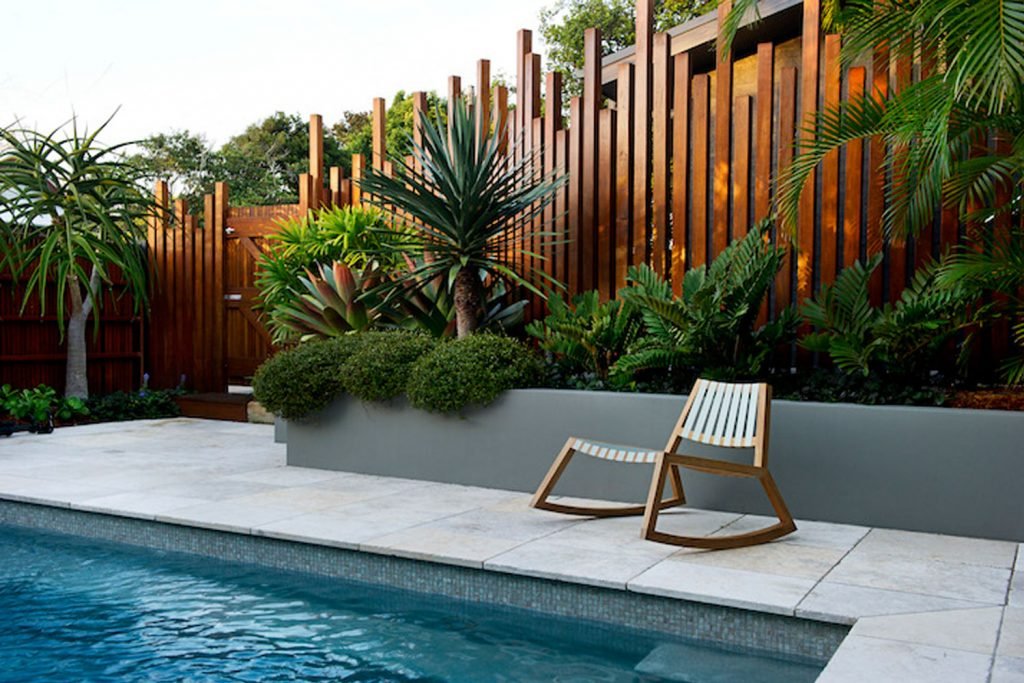
For properties requiring privacy alongside pool security, horizontal slat structures made from composite lumber or hardwoods like Ipe offer a warm, natural aesthetic. Spacing horizontal boards with narrow 1-inch gaps preserves ventilation and partial visibility while creating an acoustic barrier that reduces pool noise carrying to neighboring yards.
Integrating Enclosures into Hardscape Architecture
An enclosure should read as an intentional extension of the surrounding hardscape design rather than an added-on afterthought. Securing posts directly into structural concrete footings or core-drilling into solid stone pavers ensures that the barrier remains plumb and stable over time.
Integrating safety structures within natural stone retaining walls, raised planter beds, or elevated wooden decks softens the physical presence of the barrier. For example, anchoring a glass or metal enclosure atop a 2-foot stacked stone retaining wall satisfies height requirements while incorporating natural textures into the pool deck. Homeowners planning new aquatic layouts often integrate professionalpool safety enclosures during the primary engineering phase to coordinate footing locations, utility lines, and paver coping layouts before concrete is poured.
Enclosure Material Comparison
Choosing the appropriate enclosure material involves balancing visual transparency, maintenance demands, privacy, and structural longevity.
| Enclosure Material | Transparency & Sightlines | Weather & Chemical Resistance | Maintenance Demands | Primary Aesthetic Match |
| Frameless Tempered Glass | Exceptional (100% unobstructed view) | High; impervious to pool chemicals and rust | Moderate; requires periodic cleaning to remove water spots | Ultra-Modern / Minimalist |
| Powder-Coated Aluminum | High (slim vertical pickets) | Superior; rust-proof finish resists chemical corrosion | Low; simple soap-and-water rinsing | Transitional / Contemporary |
| Horizontal Composite Slats | Low to Moderate (provides privacy) | High; resists warping, rot, and insect damage | Low; requires no staining or sealing | Modern Organic / Rustic |
| Wrought Iron | High (classic vertical bars) | Moderate; prone to rust if protective finish chips | High; requires periodic scraping, priming, and painting | Traditional / Estate Style |
Combining Access Control with Smart Automation
Safety around pool areas extends beyond physical perimeter barriers. Modern pool enclosures can be integrated with home security networks and smart automation systems to provide real-time status updates and enhanced peace of mind.
- Smart Gate Sensors: Wireless door and gate sensors alert homeowners via smartphone notifications whenever a pool gate is opened or left unlatched.
- Submerged and Perimeter Motion Alarms: Complementing physical barriers with infrared perimeter sensors or water-surface wave detectors provides secondary warnings if the pool area is accessed after hours.
- Keyless Electronic Locks: Installing keypad or biometric latches on perimeter gates allows adults to enter securely without managing physical keys while preventing unauthorized entry.
Maintenance Strategies for Long-Term Structural Integrity
Exposure to pool chemicals like chlorine or salt, combined with continuous sunshine and moisture, challenges the finish and hardware of any outdoor enclosure. Establishing a routine care schedule maintains structural integrity and appearance over time.
- Hinge and Latch Calibration: Check self-closing hinges and spring-loaded latches monthly to ensure gates swing fully shut and latch securely without sticking. Lubricate stainless steel mechanical parts with silicone spray to prevent binding.
- Surface Cleaning: Wash aluminum pickets and glass panels regularly with mild bio-degradable soap to clear salt spray, chlorine residue, and airborne dust before deposits etch glass surfaces or corrode metallic finishes.
- Footing and Post Inspection: Inspect post bases annually for any movement, loose bolts, or cracked mortar around core-drilled paver joints, addressing instability immediately to maintain code compliance.
Balancing Safety and Landscape Aesthetics
Building a pool enclosure is a essential step in creating a secure, low-stress backyard environment. By understanding local safety regulations, selecting high-performance materials, and integrating barriers into broader hardscape planning, property owners can achieve total peace of mind without compromising on architectural style. A well-designed pool enclosure protects family members and guests while preserving continuous sightlines and enhancing the overall beauty of the outdoor living space.