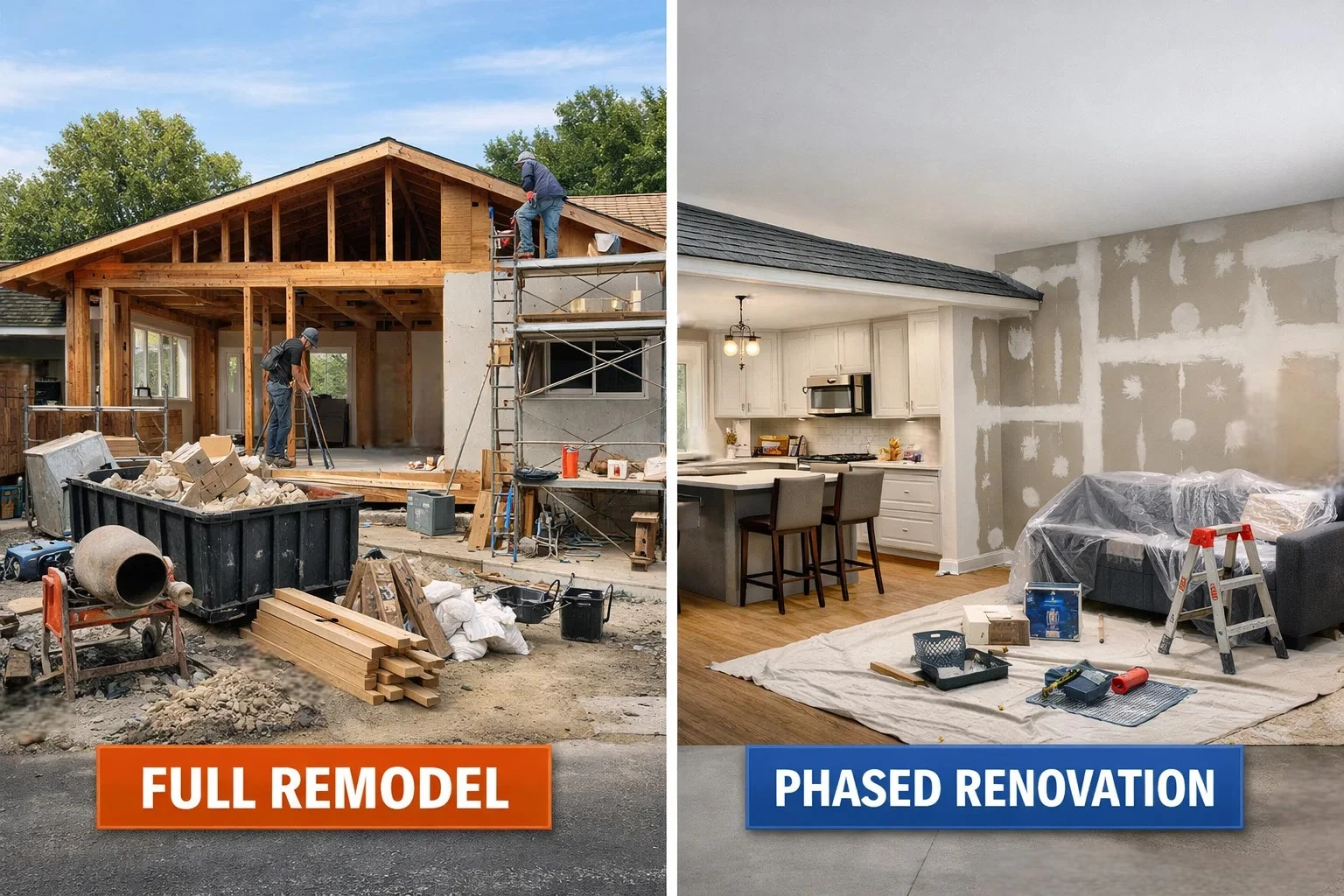
You’ve decided your house needs work. Now comes the harder question — do you do it all at once, or take it slow, one room at a time? The full home renovation vs room by room debate comes up in almost every renovation conversation I’ve had with friends and family, and honestly, there’s no single right answer. It depends on your budget, your patience, and how long you’re willing to live in a construction zone.
I’ve seen both approaches play out, sometimes disastrously, sometimes brilliantly. This piece breaks down the real costs, the hidden trade-offs, and which situations actually favor one approach over the other. No fluff, just the stuff that matters when you’re staring at quotes and trying to decide.
Full Home Renovation vs Room by Room: The Core Trade-Off
Direct answer: A full home renovation usually costs less overall due to bulk material discounts and single labour mobilization, while room-by-room renovation spreads cost over time but adds 10-15% extra due to repeated contractor visits and material wastage.
Here’s the thing nobody tells you upfront. When you do everything at once, contractors quote you better rates. They’re not setting up scaffolding, ordering materials, and pulling a team together five separate times — they do it once.
Room-by-room renovation feels safer financially because you’re spending smaller amounts more often. But that safety comes at a price. Literally. Each phase means fresh labour mobilization, fresh material orders (often in smaller, more expensive quantities), and sometimes redoing work because trades interfere with each other later.
So which wins? For pure cost efficiency, full renovation usually comes out ahead. For cash flow management, room-by-room wins hands down. It’s really a question of what kind of financial pressure you can handle.
When a Full Home Renovation Makes More Sense
Picture a couple in Ahmedabad who just bought a 15-year-old apartment. Old wiring, outdated plumbing, tiles from another decade. Doing this room by room would mean living through construction dust on and off for over a year. They chose full renovation instead — six months, one long stretch of chaos, then done.
This approach tends to work better when:
- The house needs structural or electrical work throughout (rewiring one room at a time rarely makes sense)
- You can temporarily move out or stay elsewhere during the work
- Your budget is largely available upfront, not trickling in over months
- You want design consistency across the whole home instead of a patchwork look
There’s also a practical money angle here. Bulk buying tiles, paint, and fittings for an entire house typically gets you 10-20% better pricing from vendors compared to buying small quantities for a single room every few months. Contractors also tend to give better overall quotes for bigger, continuous projects — it’s more efficient for them too, so everyone wins a little.
The obvious downside? You need a bigger chunk of money ready right away, and you’re living in disruption for weeks, sometimes months. Not everyone can manage that, and that’s completely fair.
When Room-by-Room Renovation Is the Smarter Choice
Not everyone has ₹15 lakh sitting around waiting to be spent. That’s reality for most families, and there’s nothing wrong with admitting it.
Room-by-room renovation makes sense when your budget comes in chunks — maybe a bonus this quarter, savings next year. Doing the kitchen now and the bathrooms later isn’t a failure of planning. It’s just realistic.
It also works well if:
- You’re still living in the house and can’t handle whole-home disruption
- One room genuinely needs urgent attention (a leaking bathroom, say) while others can wait
- You want to test a contractor’s quality on a smaller job before committing to bigger work
- Design tastes might evolve, and you’d rather decide room finishes closer to when you actually do them
I’ll admit, I lean toward recommending room-by-room for first-time renovators. You learn a lot doing your first room — what questions to ask, which vendors to trust, how much buffer you actually need. That knowledge makes the next room go smoother and often cheaper too.
Comparing the Real Costs: A Side-by-Side Look
Numbers make this easier to picture, so let’s look at a realistic 3BHK apartment in a Tier-1 Indian city, renovated in 2026.
Full home renovation (all at once):
- Total cost: roughly ₹14-18 lakh
- Duration: 4-6 months
- Contractor mobilization charges: paid once
- Material costs: bulk pricing, roughly 12-15% lower per unit
Room-by-room (spread over 18-24 months):
- Total cost: roughly ₹16-21 lakh (same scope, spread out)
- Duration: 18-24 months total, in phases
- Contractor mobilization charges: paid 3-4 times
- Material costs: smaller batches, higher per-unit pricing
That gap — often ₹2-3 lakh — is the real price of flexibility. It’s not wasted money exactly. You’re paying for the ability to spread costs over time and adjust plans as you go. Whether that’s worth it depends entirely on your situation.
Hidden Costs People Forget in Both Approaches
This is where budgets actually blow up, and it happens regardless of which approach you pick.
With full renovations, people often underestimate temporary accommodation costs if they’re moving out. Rent for four to six months in a Tier-1 city can easily run ₹1.5-2.5 lakh, and that’s before you factor in moving costs both ways.
With room-by-room work, the sneaky cost is repeated “small” expenses that add up. Every phase means a fresh visit charge, sometimes a new set of leftover materials you can’t use elsewhere, occasional damage to already-finished rooms during later phases (a common one — freshly painted walls get scuffed when workers move equipment through for the next room).
A few things worth budgeting for either way:
- GST on materials and labour, which people frequently forget to add into their mental total
- Storage costs if you’re moving furniture out during work
- Price escalation — material costs can shift meaningfully if your room-by-room project stretches past a year
- Repeated cleaning and touch-up costs between phases
[link to related guide on renovation budget planning here]
Timeline Differences and What They Mean for Your Life
Has this ever crossed your mind — how long can you actually tolerate living around construction? It matters more than most people admit before starting.
A full renovation, done right, wraps up in four to six months if you’re not living there. That’s intense but finite. You know the end date going in, more or less.
Room-by-room renovation, by contrast, can stretch on for a year or two, sometimes longer if budget gets tight between phases. There’s no defined end point sometimes, which can genuinely wear people down emotionally. I’ve noticed that families doing phased renovations often lose motivation around the second or third room — the initial excitement fades, and it starts feeling like a never-ending chore.
On the flip side, phased work lets life continue more normally. You’re not uprooting your whole household at once. Kids still have their rooms, mostly. The kitchen still works while the bathroom gets redone. That continuity matters a lot for some families, more than the extra cost does.
Which Approach Suits Your Situation Best
There’s no universal winner in the full home renovation vs room by room decision — it genuinely depends on your specific circumstances.
Go full renovation if you have the budget upfront, can relocate temporarily, and want it done and behind you. Go room-by-room if your funds come in stages, you’re living in the house throughout, or you want to learn as you go with lower risk per phase.
A rough decision framework:
- Choose full renovation: budget is ready, structural work needed everywhere, want consistency, can move out temporarily
- Choose room-by-room: budget arrives in installments, one area needs urgent fixing, first renovation experience, staying in the house during work
Neither choice is “wrong.” I’d just caution against room-by-room renovation dragging on indefinitely without a real plan — set target dates for each phase, even if they shift a bit, so it doesn’t become a permanent state of half-finished rooms.
Tips to Minimize Cost Regardless of Which Route You Pick
Whichever way you go, a few habits keep costs down either way.
- Lock material prices early if you’re doing phased work — prices for tiles, sanitaryware, and hardware do creep up year over year
- Get a single master design plan drawn up even for room-by-room projects, so later phases match earlier ones instead of looking disconnected
- Negotiate contractor rates for the full scope even if you’re paying in phases — many will offer better per-phase pricing if they know more work is coming
- Buy fittings and fixtures in one bulk order when possible, even for phased work, and store what you don’t need yet
[link to related guide on choosing a reliable contractor here]
These small moves can close a good chunk of that cost gap between the two approaches, honestly. It won’t erase it completely, but it helps.
FAQs on Full Home Renovation vs Room by Room
Is full home renovation always cheaper than room by room? Usually, yes, mainly due to bulk material pricing and one-time labour mobilization. But “cheaper overall” doesn’t always mean “easier to afford” — the upfront cash requirement is much higher.
How long does a full home renovation typically take in India? For a standard 2-3BHK apartment, expect four to six months if you’re not living there during the work. It can stretch longer for larger homes or if structural changes are involved.
Can I do room-by-room renovation without it looking mismatched? Yes, if you plan the overall design upfront even though execution happens in phases. A single design plan for the whole home, followed room by room, avoids that patchwork look.
What’s the biggest risk with room-by-room renovation? Losing momentum. Projects that stretch past a year often stall between phases, sometimes for years, leaving parts of the home permanently unfinished-looking.
Should I move out during a full home renovation? If your budget allows it, yes — it speeds up the work significantly and avoids daily disruption. If not, phased room-by-room work while living in the house is a reasonable alternative.
Do contractors charge more for room-by-room projects? Often, yes, particularly for repeated mobilization and smaller material orders. Negotiating the full project scope upfront, even if paid in phases, can help reduce this.
Final Thoughts
The full home renovation vs room by room decision really comes down to your budget structure and how much disruption you can handle. Full renovation tends to save money overall and gets the chaos over with faster, but it demands more cash upfront and a place to stay elsewhere. Room-by-room spreads the financial load and lets you keep living at home, at the cost of a bit more total spend and a longer emotional haul.
Whatever you choose, don’t skip the master design plan and don’t skip getting real quotes before deciding. Sit down this week, map out your rooms, and figure out honestly which timeline and budget shape actually fits your life right now — not the one you wish you had.