Your AC just stopped cooling in the middle of a May afternoon in Jaipur. Sound familiar? If you’ve ever stood in front of a unit that’s blowing lukewarm air while the outside temperature hits 44°C, you already know why a proper hvac maintenance schedule matters more than most homeowners think.
Here’s the thing — most people only think about servicing their HVAC system once it’s already acting up. By then, you’re usually looking at a repair bill instead of a routine check-up. In this guide, I’ll walk you through exactly how often you need servicing, what a good hvac maintenance schedule actually looks like in 2026, and where people (myself included, once upon a time) tend to cut corners they shouldn’t.
Why a Regular HVAC Maintenance Schedule Actually Matters
A consistent hvac maintenance schedule keeps your system running efficiently, catches small problems before they become expensive ones, and can add years to your unit’s life. Skip it, and you’re basically gambling with your comfort and your electricity bill.
I’ve noticed that a lot of homeowners treat their HVAC system like a light bulb — something you only deal with when it stops working. But an air conditioner or heat pump is closer to a car engine. It has moving parts, filters that clog, coils that get dusty, and refrigerant levels that can drop without you noticing anything at all until your bill spikes.
A neglected system doesn’t just fail suddenly. It degrades slowly. Your compressor works harder than it should. Your filters trap less dust, so your indoor air quality drops too. And your energy bills creep up month after month, often without anyone connecting the dots.
How Often Should You Really Service Your HVAC System?
For most residential systems, twice a year is the sweet spot — once before summer, once before the heating season starts (or before winter, if you’re somewhere that gets properly cold). That’s not a random number; it’s based on how HVAC systems experience wear.
Here’s a rough breakdown I’d suggest:
- Split ACs (most common in Indian homes): Once before peak summer (March-April), once post-monsoon to clear out moisture buildup
- Central HVAC systems: Twice yearly at minimum — spring and fall check-ups
- Heat pumps: Every 6 months, since they run almost year-round in both heating and cooling modes
- Window ACs: Once a year is usually fine unless you’re running it constantly in a shop or small office
If you’re running your system in a dusty environment — think ground-floor shops near a main road, or homes near construction sites — you’ll want to bump that up. Dust is genuinely the number one killer of HVAC efficiency, and it’s not close.
Monthly vs Seasonal vs Annual: Breaking Down the Real Schedule
Not everything on an hvac maintenance schedule needs a technician. Some of it’s on you, and it takes ten minutes.
Monthly Tasks You Can Do Yourself
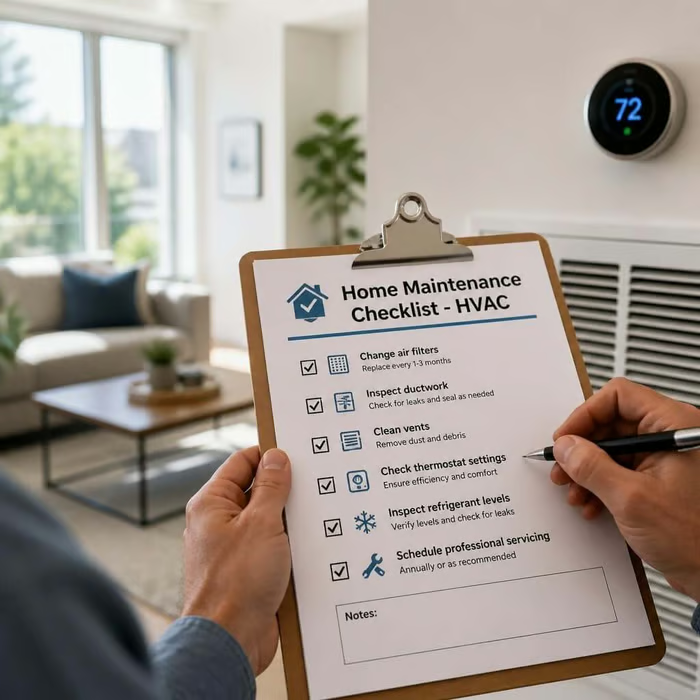
- Check and clean (or replace) air filters — this alone prevents a huge chunk of efficiency loss
- Glance at the outdoor unit for leaves, debris, or anything blocking airflow
- Listen for unusual sounds. A healthy AC hums quietly; grinding or rattling is never normal
Seasonal Tasks (Every 3-4 Months)
- Clean the condenser coils
- Check refrigerant levels if cooling feels weaker than usual
- Inspect ductwork for leaks, especially in older buildings
Annual Professional Servicing
This is where a trained technician actually earns their fee. They’ll check electrical connections, test the thermostat calibration, measure airflow, and catch things you simply can’t see from the outside — like a slow refrigerant leak or a compressor that’s starting to strain.
Signs Your HVAC Needs Servicing Sooner Than Scheduled
Don’t wait for your calendar reminder if your system is already telling you something’s wrong.
Watch for these warning signs:
- Weak airflow even at the highest fan setting
- Strange smells — musty odors usually mean mold in the ducts or drip tray
- Water pooling near the indoor unit (a classic sign of a clogged drain line)
- Your electricity bill jumped 15-20% with no change in usage
- The unit short-cycles, turning on and off every few minutes
Picture a small business owner running a boutique in Jaipur’s Malviya Nagar. Her split AC started making a faint clicking sound in March, right before the busy wedding season. She ignored it for three weeks because business was hectic. By the time she called a technician, the compressor had partially seized, and what would’ve been a ₹600 cleaning turned into a ₹9,000 repair. That’s the real cost of skipping the small warning signs.
What Happens If You Skip Regular Maintenance?
Skipping your hvac maintenance schedule doesn’t save money — it just delays the cost and makes it bigger. Dirty filters and coils force the compressor to work overtime, which spikes your electricity bill and shortens the system’s overall lifespan by several years.
I’ll be honest, I used to think annual servicing was a bit of an upsell tactic from AC companies. Then I skipped mine for almost two years on a rental property and the compressor failed entirely in the third summer. Replacement cost more than four years of maintenance combined. Lesson learned, the expensive way.
Beyond the money angle, there’s the air quality issue too — an AC that hasn’t been cleaned in over a year is basically recirculating dust and allergens through your home every single day.
DIY HVAC Maintenance vs Hiring a Professional
There’s a middle ground here, and honestly, most people get this balance wrong in one direction or the other.
DIY is fine for:
- Filter cleaning and replacement
- Wiping down visible dust on the outdoor unit
- Basic visual inspections
Call a professional for:
- Refrigerant checks or top-ups (this requires certification in most cases)
- Electrical diagnostics
- Deep coil cleaning with proper chemical solutions
- Ductwork inspection
Trying to save ₹500 by doing a refrigerant top-up yourself, without the right gauges, can genuinely damage your compressor. It’s just not worth the risk. [link to a related guide on DIY AC cleaning steps here]
Seasonal HVAC Maintenance Schedule: A Practical Checklist
Here’s roughly what I’d recommend building your year around, especially if you’re in a climate with distinct summer and monsoon seasons like most of India.
Pre-summer (February-March): Deep clean filters and coils, check refrigerant levels, test thermostat accuracy, inspect for any winter dust buildup.
Monsoon (June-September): Check for moisture damage, clear drain lines (this is huge — clogged drains during monsoon cause the most water-leakage complaints), inspect for rust on outdoor units.
Post-monsoon/Pre-winter (October-November): Clean filters again, check for any mold growth from monsoon humidity, service heating elements if you use a heat pump or furnace.
Peak winter (December-January): Mostly monitoring — check for unusual noises, keep vents unblocked, and if you have a furnace, get the heat exchanger checked once for cracks.
Cost of HVAC Maintenance in 2026: What to Expect
Costs vary quite a bit depending on your city and system type, but here’s a general range for Indian homeowners in 2026:
- Basic AC servicing (cleaning + filter check): ₹500-₹1,200 per unit
- Full servicing with gas top-up: ₹1,500-₹3,500
- Annual maintenance contracts (AMCs): ₹2,000-₹6,000 per year, often covering 2-4 visits
An AMC honestly tends to work out cheaper in the long run if you’ve got more than one unit at home — plus you’re not stuck negotiating prices during peak summer when technicians are booked out for days.
[link to related guide on choosing the right AMC plan here]
Frequently Asked Questions
How often should I service my split AC in India? Twice a year works well for most homes — once before summer hits and once after the monsoon. If you’re in a dusty area or run the AC almost daily, consider a quick filter check every month too.
Can I skip HVAC maintenance if my system seems fine? You can, but you’re rolling the dice. Systems that “seem fine” often have gradual issues building up — a slow refrigerant leak or dust buildup — that only show up as a sudden failure later, usually at the worst possible time.
Does regular maintenance actually lower electricity bills? Yes, noticeably. A clean, well-maintained system can use 10-15% less energy than a neglected one doing the same job. Dirty coils and filters make the compressor work much harder than it needs to.
Is an AMC (Annual Maintenance Contract) worth it? For most households with 2 or more units, yes. It’s more predictable cost-wise and you get priority service during peak season, which matters a lot when every technician in town is booked solid in May.
How long does a typical HVAC unit last with proper maintenance? A well-maintained split AC can comfortably run 10-15 years. Without regular servicing, that number often drops to 7-8 years, sometimes less if it’s in a dusty or coastal environment.
What’s the biggest mistake people make with HVAC maintenance? Waiting until something breaks. Filters especially — people forget them for months, and that single habit alone probably causes more efficiency loss than every other factor combined.
Final Thoughts
A solid hvac maintenance schedule isn’t complicated — it’s really just filters monthly, a proper clean every season, and one thorough professional check-up before your system’s busiest stretch of the year. The homeowners who stick to this rarely deal with emergency breakdowns, and their bills stay predictable too.
If it’s been over a year since anyone’s looked at your unit, don’t wait for the first hot week of summer to find out something’s wrong. Book a basic servicing this week — it’s a small cost now compared to a compressor replacement later.