You’re mid-shower, shampoo in your hair, and suddenly the water just… trickles. Sound familiar? A low water pressure fix isn’t always about calling a plumber and spending money you didn’t plan to. Sometimes it’s a five-minute fix. Sometimes it’s a bigger issue hiding in your pipes. I’ve dealt with this in three different flats over the years, and honestly, the cause is rarely what people first assume. Let’s go through why it happens and what actually solves it, not just temporarily masks it.
What Causes Low Water Pressure in the First Place?
Direct answer: Low water pressure is usually caused by clogged pipes, a faulty pressure regulator, leaks, corroded plumbing, or municipal supply issues. In older buildings, mineral buildup inside pipes is the most common culprit — it narrows the pipe over years without anyone noticing.
There isn’t one single reason your taps are underperforming. It could be something as small as a clogged aerator, or something as serious as a leak inside a wall you can’t even see.
A few usual suspects:
- Sediment or mineral deposits building up inside old galvanized pipes
- A partially closed shut-off valve (happens more than you’d think after renovation work)
- Municipal supply drops during peak hours, especially common in parts of urban India
- Corroded or rusted pipe sections restricting flow
- A shared overhead tank that’s running low or has a clogged inlet
I’ve noticed that people jump straight to blaming the water board, when half the time the actual issue is sitting right under their own kitchen sink.
Check Your Aerators and Showerheads First
Before you assume it’s a plumbing disaster, check the boring stuff. This is genuinely where most low water pressure fix attempts should start.
Unscrew the little mesh aerator at the tip of your tap. If it’s caked in white, chalky buildup, that’s your answer — hard water deposits. Soak it in vinegar for about 30 minutes, scrub with an old toothbrush, screw it back on. Same story for showerheads; soak the whole head if it’s detachable.
This single step solves the issue more often than you’d expect, and it costs nothing.
Inspect for Leaks You Might Not Have Noticed
Direct answer: A hidden leak reduces pressure at the tap because water is escaping before it even reaches you. Check your water meter — if it moves when every tap in the house is off, there’s a leak somewhere in the line.
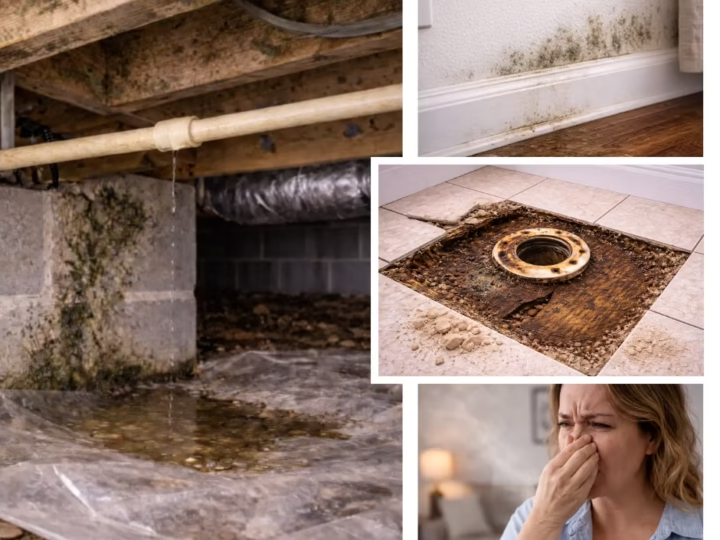
Leaks aren’t always dramatic. Sometimes it’s a damp patch on a wall, a slightly soft spot on flooring, or just an unexplained jump in your water bill. Picture a small business owner in Jaipur running a small guesthouse — a slow leak behind a bathroom wall went unnoticed for months, quietly draining pressure across every room, until the water bill finally gave it away.
If you suspect a leak, turn off every tap in the house and watch the meter for 15 minutes. Movement means trouble, and at that point, it’s a call-a-plumber situation, not a DIY one.
Clean or Replace Your Pressure Regulator
Not every home has one, but if yours does, this part matters more than people realize.
A pressure regulator (or pressure reducing valve) controls how much water force comes into your home from the main line. Over years, these wear out or get clogged with sediment, and pressure starts dropping gradually rather than all at once — which is honestly why most people miss it until it’s quite bad.
If you’re technically confident, you can test and adjust it yourself with a pressure gauge from a hardware store (roughly ₹300-500 in most Indian cities). Otherwise, get a plumber to check it during your next servicing visit. [link to related guide about home plumbing maintenance here]
Look at Your Water Tank and Overhead Supply
For apartments and independent houses using overhead tanks, this is often where the real problem sits — not the taps at all.
A tank that’s too low, positioned at insufficient height, or has a clogged inlet pipe will starve every fixture downstream. Ever noticed pressure is fine on the ground floor but terrible on the third? That’s usually a height and gravity issue, not a low water pressure mystery.
Things worth checking:
- Is the tank actually filling up fully, or stopping early due to a faulty float valve?
- Is the inlet pipe partially blocked with debris or algae?
- Has the tank been cleaned in the last 6 months? Sediment buildup at the bottom restricts outflow more than people expect.
Old Galvanized Pipes Are Often the Real Villain
If your building is more than 20-25 years old and still has galvanized iron pipes, this deserves a closer look.
These pipes corrode from the inside out over decades. The exterior looks completely fine while the interior narrows like a clogged artery. This is genuinely one of the most common reasons for a gradual, building-wide pressure drop, and no aerator cleaning is going to fix it.
Replacing sections of old plumbing with copper or CPVC piping is expensive — anywhere from ₹15,000 to ₹60,000 depending on the scope — but it’s a permanent low water pressure fix, not a temporary patch. If multiple taps across your home are affected equally, this is worth investigating before you spend money on smaller fixes that won’t move the needle.
When the Problem Is Actually Your Municipal Supply
Sometimes it really isn’t you. Municipal water pressure fluctuates, especially during peak morning and evening hours when demand across a neighborhood spikes at once.
Check with neighbors — if everyone’s dealing with the same drop at the same time, it’s likely a supply-side issue, not something inside your pipes. A booster pump is the practical low water pressure fix here, and a decent domestic one runs somewhere between ₹4,000 and ₹10,000 depending on capacity. [link to related guide about choosing a water booster pump here]
DIY Fixes vs When You Actually Need a Plumber
Direct answer: DIY works for clogged aerators, showerhead cleaning, and simple valve checks. Call a plumber for suspected leaks, pressure regulator issues, corroded pipe sections, or anything involving the main supply line — guessing wrong here can get expensive fast.
Here’s roughly how I’d sort it:
- Clogged aerator or showerhead — do it yourself, takes 20 minutes
- Partially closed valve — check and open it yourself, free
- Suspected leak inside a wall — plumber, don’t attempt this alone
- Old corroded pipes — plumber, and possibly a longer-term repiping conversation
- Pressure regulator adjustment — DIY if confident, plumber if not
I’ll be honest, I used to think every plumbing call was overkill until I ignored a slow leak for two months. That mistake cost more than the plumber visit would have.
FAQ
Why does my water pressure drop only in the evening? That’s almost always a municipal supply issue — demand across your area spikes during peak hours, and pressure naturally dips. A booster pump usually solves this if it happens consistently.
Can hard water cause low water pressure? Yes, definitely. Mineral deposits build up inside pipes, aerators, and showerheads over time, gradually narrowing the passage and reducing flow. It’s one of the most common and easiest issues to fix.
Is low water pressure a sign of a bigger plumbing problem? Sometimes. If it’s sudden, uneven across taps, or paired with a rising water bill, it could point to a leak or corroded pipes. Gradual, building-wide drops usually mean old plumbing.
How much does it cost to fix low water pressure in India? It ranges quite a bit — cleaning an aerator costs nothing, a booster pump runs ₹4,000-10,000, and repiping an older home can go up to ₹60,000 depending on the extent of the work.
Does a water softener help with low water pressure? It can help prevent future mineral buildup, especially in hard water regions, but it won’t fix pressure loss that’s already caused by existing clogs or corrosion.
Should I install a pressure booster pump myself? It’s not recommended unless you have electrical and plumbing experience. Incorrect installation can strain your pipes or void warranties, so it’s worth the professional installation cost.
Conclusion
A low water pressure fix isn’t always complicated, but it does require a bit of detective work before you spend money. Start small — clean your aerators, check for obvious leaks, look at your tank setup — before assuming the worst. If the problem’s building-wide or tied to old pipework, that’s when it’s genuinely worth bringing in a plumber rather than guessing your way through it.
Next time your shower slows to a trickle, don’t just sigh and put up with it — work through this list one step at a time, and you’ll likely find the answer before you even need to make a call.