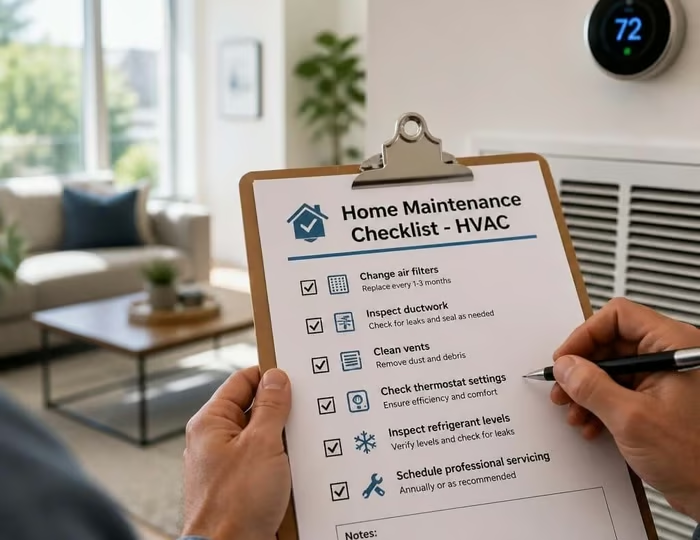
You clean the house every week. Maybe you mop, dust the shelves, wipe down the kitchen counters. But when did you last check your geyser for sediment build-up? Or test whether your smoke detector actually works?
Most monthly home maintenance tasks don’t announce themselves. There’s no red light that flashes “hey, your exhaust fan is choking on grease.” Things just quietly get worse until one day the AC stops cooling, or you get a shock of a very different kind when you open the electricity bill. I’ve been there — ignored a slow geyser leak for almost three months because it seemed too minor to bother with. It wasn’t minor. It cost me a new heating element and a repainted ceiling.
This guide covers the monthly home maintenance tasks that quietly slip through the cracks — the ones that don’t feel urgent until they very much are.
Why Most People Skip Monthly Home Maintenance Tasks
Here’s the honest answer: because nothing looks broken. A dirty AC filter still blows air. A geyser with sediment still gives hot water — just slower, and using more electricity to do it. The damage is invisible until it isn’t.
Quick answer: Monthly home maintenance tasks get skipped mainly because their warning signs are gradual, not sudden. Appliances keep “working” while quietly losing efficiency, so the problem stays invisible until a bigger, costlier failure forces attention.
There’s also the calendar problem. Nobody puts “check exhaust fan” on their to-do list next to “pay electricity bill.” It’s just not a habit most households have built. And honestly, a lot of maintenance advice online is written for houses with basements and furnaces — not much use if you’re living in a 2BHK in Jaipur with a rooftop water tank and a wall-mounted split AC.
Clean Your Kitchen Exhaust Fan and Chimney Filter
This one’s almost universally ignored. Grease builds up on the exhaust fan blades and chimney filter mesh so gradually you barely notice it — until the fan starts making a rattling noise or, worse, stops pulling smoke out at all.
Picture a small business owner in Jaipur running a home-based tiffin service. Her kitchen exhaust runs for hours daily. Skip cleaning it for three months, and the mesh filter turns into a solid, sticky block. Airflow drops by half. The kitchen stays smoky, the walls start yellowing, and the motor works twice as hard — which means a shorter fan life and a higher power bill.
A few things worth doing monthly:
- Soak the mesh filter in hot water with dish soap or baking soda for 20-30 minutes
- Wipe down the fan blades with a degreaser, not just a damp cloth
- Check that the exhaust duct outside isn’t blocked by a bird’s nest or debris (yes, this happens more often than you’d think)
Chimney filters (the baffle or cassette type) usually need cleaning every 15-20 days if you cook daily with a lot of oil and spices — which, let’s be real, most Indian kitchens do.
Test Smoke Detectors and Check Your Fire Extinguisher
Nobody wants to think about this until they need it. That’s exactly the problem.
If you have smoke detectors installed, press the test button once a month. Batteries die quietly, and a detector with a dead battery is really just a plastic disc on your ceiling. If you don’t have one yet, honestly, this is the year to get a basic unit — they’re not expensive anymore.
For homes with a fire extinguisher (increasingly common in apartments with modular kitchens and gas connections), check the pressure gauge needle monthly. It should sit in the green zone. If it’s dropped into the red, get it refilled — don’t wait for an emergency to find out it’s useless.
Inspect Your Geyser for Leaks and Sediment
This is the one I mentioned earlier, and it’s genuinely one of the most overlooked monthly home maintenance tasks in Indian homes. Hard water is common across a lot of North India, and it means mineral deposits build up inside your geyser tank faster than you’d expect.
Quick answer: Check your geyser monthly for rust stains near the base, unusual noises during heating, or water that takes longer to warm up. These are early signs of sediment build-up, which reduces efficiency and can shorten the appliance’s life by years if ignored.
Things to look at:
- Any water pooling or dampness around the base of the geyser
- Rust streaks on the outer casing
- A banging or popping sound while heating (that’s sediment, not a ghost in your walls)
- Time taken to heat water — noticeably slower than usual is a red flag
If you’re on hard water, flushing the tank every 2-3 months (not just monthly) helps a lot. A plumber can do this in about 20 minutes for a few hundred rupees, and it’s cheaper than replacing a heating element that’s burned out from scale build-up.
Check RO Purifier and Water Filter Cartridges
Most people set a reminder for RO filter replacement — six months, a year, whatever the brand recommends. Fair enough. But almost nobody checks the unit monthly in between.
Here’s what I’ve noticed with my own RO system: the flow rate drops gradually, so slowly that you don’t register it day to day. Then one month you realize filling a bottle takes twice as long, and you assume it’s normal. It’s not. It usually means the pre-filter is clogging early, maybe because your water source has more sediment than usual that season.
A quick monthly check:
- Look at the flow rate — has it slowed down noticeably?
- Check the storage tank for any odd smell or taste in the water
- Wipe down the outer unit and check for leaks at the joints, especially the ones near the wall mount
Cheap fix now, expensive fix later. That’s basically the theme of this whole article.
Clean AC Filters and Check for Water Leakage
If you’re running your split or window AC regularly — and in Rajasthan, that’s basically eight months of the year — the filters need a wash every single month during peak season. A dusty filter doesn’t just mean weaker cooling. It means the compressor works harder, your electricity bill climbs, and the indoor unit is more likely to develop that musty smell nobody wants.
Also check the drainage pipe. Water leaking from the indoor unit onto your wall or floor almost always means a blocked drain line, not a refrigerant problem (a common and expensive misdiagnosis, by the way). Clearing it yourself with a wet-dry vacuum or calling a technician for a quick service is far cheaper than repainting a water-stained ceiling.
Look for Pest Entry Points Before They Become an Infestation
This is one of those monthly home maintenance tasks that feels almost paranoid to do — until you skip it for six months and find termites in your wooden almirah.
Walk around your home once a month and check:
- Gaps under doors, especially the main entrance and balcony doors
- Cracks near window frames or where pipes enter the wall
- Damp corners in the kitchen or bathroom, which attract cockroaches
- Wooden furniture legs for tiny holes or powder-like residue (termite activity)
Monsoon season makes this worse. Damp walls and standing water near drains basically send out invitations to pests. A monthly walk-through with a torch, honestly, catches most problems before they become a pest-control call-out.
Check Door Hinges, Locks and Window Seals
Squeaky hinges and stiff locks are annoying, sure, but they’re also an early sign of rust or wear that can eventually mean a jammed door or a lock that fails right when you need it most.
Once a month:
- Oil hinges on the main door and any door that sees heavy use
- Check that window latches close fully — gaps let in dust, mosquitoes, and during monsoon, water
- Test the main door lock with the spare key too, not just the one you use daily (this catches wear you might not notice otherwise)
It takes maybe ten minutes for a whole flat. Worth it.
Inspect for Damp Patches and Mould After Monsoon Season
If you live anywhere that gets a proper monsoon, this deserves its own monthly check, not just an annual one. Damp patches on ceilings or near window frames often start small — a faint discoloration you could easily mistake for dust.
Quick answer: Check ceiling corners, false ceiling joints, and areas below balconies monthly during and after monsoon. Early mould or damp patches are far cheaper to treat with a waterproofing touch-up than after they’ve spread and damaged the plaster.
Left alone, these patches spread, the paint starts peeling, and eventually you’re looking at a full waterproofing job instead of a small touch-up. Keep a torch handy and actually look up at your ceiling corners once a month — most people simply never do.
Test Your Inverter Battery and Backup Systems
For homes running an inverter — which, given how common power cuts still are in a lot of areas, is most of us — checking the battery water level monthly matters more than people realize. Low water levels shorten battery life dramatically, sometimes cutting a 3-4 year battery down to under 2.
Quick monthly checklist:
- Check water levels in each cell (distilled water only, never tap water)
- Look for any corrosion or white residue on the terminals
- Test backup duration once in a while — if it’s noticeably shorter than before, the battery may be wearing out
[link to related guide about inverter battery maintenance here]
FAQ: Monthly Home Maintenance Tasks
Q: How much time do monthly home maintenance tasks actually take? Honestly, not much. Most of the checks above — exhaust fan, AC filter, geyser inspection, hinges — take under two hours total if you do them together on one weekend. Spread across a month, that’s nothing.
Q: What’s the most commonly forgotten maintenance task in Indian homes? Geyser sediment checks, without question. It’s out of sight, it’s in the bathroom (which people clean but rarely inspect the appliance itself), and the symptoms are gradual enough to ignore for months.
Q: Do I need to hire a professional for these checks, or can I do them myself? Most of these are DIY-friendly — filter cleaning, hinge oiling, visual inspections. Geyser flushing and AC gas-related issues are better left to a technician, but the monthly “check and notice” part is something anyone can do.
Q: How often should I really clean my AC filter? Every month during peak usage season (April to September in most of North India), and maybe every two months otherwise. If you’re running the AC daily, don’t stretch it beyond a month.
Q: Can skipping these tasks actually damage my home, or is it just about efficiency? Both, really. Some things (dirty filters, RO cartridges) mainly cost you money through lower efficiency. Others — damp patches, geyser leaks, pest entry points — can lead to real structural or appliance damage if ignored long enough.
Q: What’s a good way to remember to do all this every month? Tie it to something you already do monthly, like paying rent or your electricity bill. Keep a simple checklist on your fridge or phone notes. It doesn’t need to be fancy — it just needs to exist somewhere you’ll actually see it.
Conclusion
None of this is complicated. It’s not even particularly time-consuming once it becomes a habit. The real issue is that monthly home maintenance tasks are easy to postpone precisely because nothing looks urgent — until the geyser leaks onto your ceiling or the AC stops cooling in the middle of May.
Pick one Sunday a month. Walk through your home with a torch and ten free minutes. Check the exhaust fan, glance at the geyser, oil a hinge or two. [link to related guide about seasonal home maintenance checklist here] It’s a small habit, but it’s the difference between a ₹500 filter clean and a ₹15,000 appliance replacement. Start this month — your future self, and your electricity bill, will thank you.