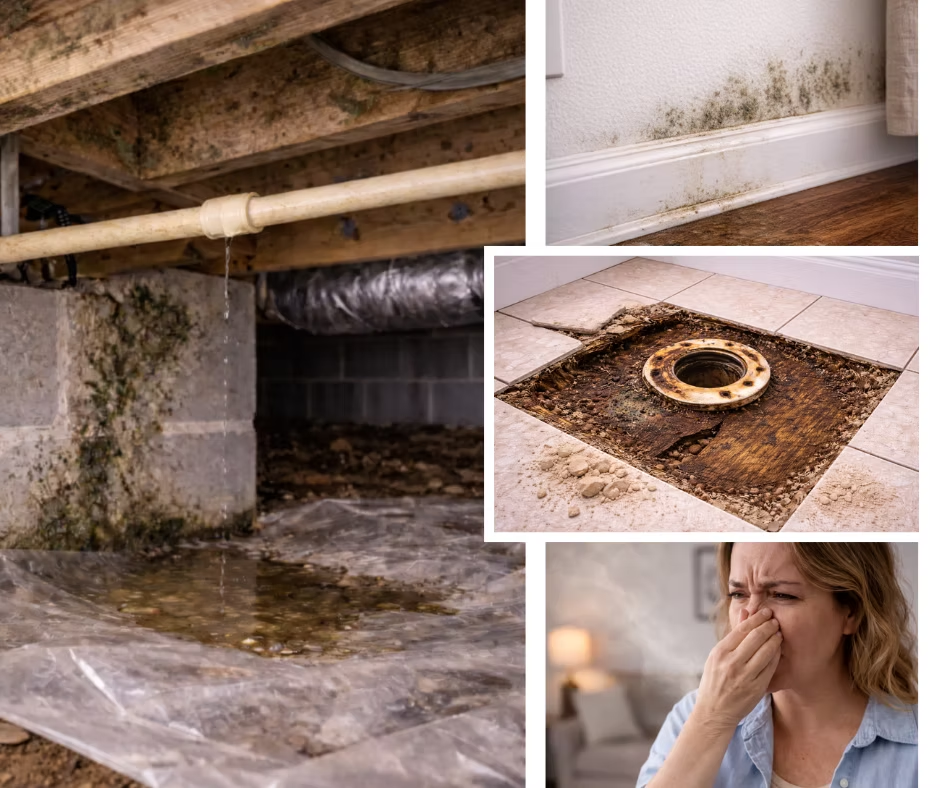
Your water bill jumped for no obvious reason. There’s a faint musty smell near the bathroom wall you can’t quite place. Sound like nothing? It might not be. The signs of hidden pipe leak damage are usually small and easy to brush off — until the day they aren’t, and you’re mopping up a flooded living room at 2am. I’ve been through this exact situation in a rented flat, and looking back, the warning signs were there for weeks. Let’s walk through what to actually watch for, because catching this early can save you a genuinely enormous repair bill.
Why Hidden Pipe Leaks Are So Easy to Miss
Direct answer: Hidden pipe leaks often occur behind walls, under flooring, or inside ceilings, so there’s no visible water to alert you immediately. Instead, the signs of hidden pipe leak damage show up indirectly — through smell, sound, discoloration, or unexplained cost increases, long before any actual flooding.
Unlike a burst tap or an overflowing tank, a leak inside a wall doesn’t announce itself. It just quietly does damage, day after day, out of sight.
Most people don’t think about their plumbing until something’s visibly wrong. Fair enough — nobody wants to think about pipes on a random Tuesday. But that’s exactly why these leaks go unnoticed for months in a lot of Indian homes, especially older constructions with concealed piping run through walls and slabs.
Unexplained Spike in Your Water Bill
This is usually the first real clue, and honestly the easiest one to check.
If your water bill jumps by 20-30% or more without any change in your usage habits, that’s a red flag worth taking seriously. I’ve noticed people blame the water board first — “they must have miscalculated” — when nine times out of ten, it’s something happening quietly inside their own pipes.
A simple test: note your water meter reading before bed, don’t use any water overnight, and check it again in the morning. If it’s moved even slightly, there’s a leak somewhere in the system.
Musty Smells or Mold Growth in Unexpected Places
Direct answer: A persistent musty or damp smell near walls, under sinks, or near flooring — especially without any visible water source — is one of the clearest signs of hidden pipe leak problems, since trapped moisture inside walls creates ideal conditions for mold within just 24-48 hours.
Mold doesn’t need much. Just consistent moisture and a bit of time. If you’re catching a faint smell in a corner of a room that has no obvious reason to be damp, don’t just spray air freshener and move on.
Check behind furniture pushed against exterior walls too — poor airflow there makes early mold easier to miss.
Discoloration, Stains, or Peeling Paint on Walls and Ceilings
Yellowish-brown stains, bubbling paint, or a slightly warped patch on a wall or ceiling — these are visual clues that shouldn’t be ignored, even if they seem minor at first.
Picture a small business owner in Jaipur running a boutique hotel — a faint yellow stain on a guest room ceiling was dismissed as old paint for months, until the ceiling actually sagged and revealed a slow leak from the floor above. That repair cost nearly ₹40,000, versus what would’ve been a ₹2,000-3,000 fix if caught early.
A few things worth checking regularly:
- Ceiling corners, especially below bathrooms on upper floors
- Skirting boards near exterior walls
- Paint that looks slightly “bubbled” rather than just old and faded
Sound of Running Water When Everything’s Off
Ever walked into a quiet room and heard a faint trickling or hissing sound, even though every tap in the house is closed? That’s not your imagination.
This is one of the more unsettling signs of hidden pipe leak issues, because it usually means water’s actively flowing somewhere it shouldn’t be — inside a wall cavity or under the floor. It’s most noticeable at night when everything else is silent.
If you hear this, don’t wait around trying to figure it out yourself. This is genuinely a same-week plumber call, not a “I’ll deal with it eventually” situation.
Warm Spots on Flooring (A Sign You Might Not Expect)
This one surprises people, but it’s a real and fairly common indicator, especially in homes with hot water lines running under tiled floors.
If you notice a specific patch of flooring that feels warmer than the rest, that could point to a hot water pipe leak beneath it. It’s subtle, and most people genuinely just don’t notice until the tile starts cracking or lifting slightly at the edges. [link to related guide about detecting slab leaks here]
Drop in Water Pressure Across Specific Fixtures
If pressure has dropped noticeably at one particular tap or fixture, while others in the house seem fine, that’s worth investigating rather than dismissing as normal wear.
A leak diverts water before it reaches the fixture, which is why pressure loss tends to be uneven rather than affecting the whole house equally. [link to related guide about fixing low water pressure at home here] If you’ve already ruled out clogged aerators and it’s still weirdly weak at just one tap, a leak further up that line is a real possibility.
What to Do the Moment You Spot the Signs
Direct answer: The moment you notice any signs of hidden pipe leak damage, shut off the main water supply if the issue seems active, document the affected area with photos, and call a licensed plumber for a leak detection inspection rather than attempting repairs on a concealed pipe yourself.
Here’s roughly how I’d approach it, based on what’s worked (and hasn’t) for me before:
- Don’t panic, but don’t ignore it either — a slow leak left for months does far more damage than one caught within days.
- Take photos as evidence, especially if you’re renting and need to show a landlord.
- Get a proper leak detection service if the source isn’t obvious — acoustic leak detectors can pinpoint it without tearing up your whole floor, and this usually costs somewhere around ₹1,500-3,500 depending on your city.
- Once located, decide between a spot repair or, for older galvanized pipework, a broader repiping conversation with your plumber.
I’ll admit, my first instinct is always to hope it’s nothing. It rarely is. Better to check and be wrong than ignore it and be right.
FAQ
What are the first signs of a hidden pipe leak? Usually it’s a spike in your water bill, a musty smell without an obvious cause, or a faint discoloration on a wall or ceiling. These small clues almost always show up weeks before any visible flooding.
Can a hidden pipe leak cause structural damage? Yes, over time it definitely can. Prolonged moisture weakens plaster, wood, and even concrete slowly, and in serious cases can affect structural integrity if left unaddressed for months or years.
How do professionals detect hidden pipe leaks? They typically use acoustic leak detection equipment, thermal imaging cameras, or pressure testing on isolated sections of plumbing to pinpoint the exact location without needing to break open every wall.
Is a hidden pipe leak covered by home insurance in India? It depends entirely on your specific policy — some cover water damage from sudden leaks, while gradual, long-term leaks are often excluded. Worth checking your policy wording directly rather than assuming.
How much does it cost to fix a hidden pipe leak? It varies a lot based on location and severity — a simple spot repair might run ₹2,000-5,000, while damage requiring wall or floor work can go up to ₹30,000-50,000 or more.
Can I detect a hidden pipe leak myself without a professional? To some extent, yes. Checking your water meter overnight, watching for damp patches, and listening for running water are good first steps, but pinpointing the exact spot usually still needs professional equipment.
Conclusion
The signs of hidden pipe leak damage are rarely dramatic at first — a slightly higher bill, a faint smell, a stain that seems too small to worry about. That’s exactly what makes them dangerous. Catching these early isn’t about being paranoid, it’s just good sense, especially in older homes with concealed plumbing.
If any of this sounded a little too familiar while you were reading, don’t put it off till the weekend. Check your water meter tonight, and if something feels off, get a plumber in for a proper look before it becomes a much bigger, much wetter problem.