You’ve booked the tickets, packed the bags, and you’re already thinking about the beach or the hills. Then it hits you — did I lock the balcony door? A proper home security checklist for vacation exists exactly for that moment of panic at the airport, three hours before your flight.
Here’s what most people don’t realize: burglars don’t need a fancy plan. They just need an obvious sign that nobody’s home — three days of newspapers piling up, lights that never change, a car that hasn’t moved in a week. A decent home security checklist for vacation isn’t about paranoia. It’s about closing the small, boring gaps that make your house look empty.
I’ve put together this list after helping a few relatives lock down their homes before trips, and honestly, after learning a couple of things the hard way myself. Let’s get into it.
Why You Actually Need a Home Security Checklist Before Vacation
A home security checklist for vacation matters because most burglaries happen when a house looks obviously unoccupied — piled-up mail, dark windows every night, silence where there’s usually noise. A short pre-trip routine removes these visual cues and cuts your risk significantly.
Think about it from a burglar’s perspective for a second. They’re not looking to break into a fortress. They’re looking for the path of least resistance — and an empty-looking house, especially one in a quiet lane, is exactly that.
I’ve noticed that people spend hours planning their itinerary and packing lists but give security maybe ten minutes of thought, usually the night before they leave. That’s backwards. The security part should get planned a few days out, not rushed at midnight while you’re also trying to find your passport.
A neighbor of mine in Jaipur went to Goa for a week last year and came back to find her balcony grill door pried open — not because thieves broke in, but because it had been left unlocked the whole time, and someone noticed the lights never changed for four straight nights. Nothing dramatic. Just an easy opportunity someone eventually took.
Secure All Entry Points Before You Leave
This sounds obvious, but it’s the step people rush through the most.
Go through every door and window in the house, not just the front door. That includes:
- Balcony doors and grills, especially ones facing a terrace or adjoining building
- Bathroom windows, which people forget constantly
- Back doors or service entrances, if your home has one
- Garage or scooter shed locks — check these are actually functioning, not just closed
Has this ever happened to you — you double-check the main lock, feel confident, and then remember two days into your trip that the kitchen window was left open? It happens more than people admit.
If you’ve got a spare key hidden under a doormat or flowerpot, get rid of that habit entirely. It’s the first place anyone looks, genuinely the first place. Give a spare to a trusted neighbor or family member instead.
Set Up Lights and Timers to Fake a Presence
The easiest way to make an empty house look occupied is with timer-controlled lights that switch on and off at realistic hours — not left on constantly, since that pattern itself signals nobody’s home.
A house lit up 24/7 for a week looks just as suspicious as one that’s dark every night. Timers that mimic a normal routine work far better.
A few practical setups worth considering:
- Basic plug-in timers for a living room lamp, set to switch on around 7 PM and off by 11 PM
- Smart bulbs controlled via app, if your budget allows — these let you vary the schedule slightly each day, which looks more natural
- A TV or radio on a timer for background noise near ground-floor windows
Costs for basic plug-in timers in India run around ₹200-500 for a decent one. Not a big investment for the peace of mind it buys you.
Stop Mail, Newspapers, and Deliveries From Piling Up
A stack of newspapers at the gate is basically a flashing sign. Don’t underestimate this one.
Call your newspaper vendor and pause delivery for your travel dates — most will do this without any hassle if you give a day’s notice. Same goes for milk delivery if you use one.
If you’ve got recurring Amazon or Flipkart orders scheduled, push the delivery dates or have them held at a pickup point instead. A parcel sitting untouched on your doorstep for three days tells the whole street you’re away.
Ask a neighbor to collect anything that does show up. It takes them two minutes and saves you a genuine risk.
Ask a Trusted Neighbor to Keep an Eye Out
Technology helps, sure, but a real person watching your house beats most gadgets combined.
Here’s what actually works:
- Give a spare key to someone you genuinely trust, not just anyone on your floor
- Ask them to park their own vehicle near your entrance occasionally, if that’s feasible
- Request they glance at your house once a day, nothing formal, just a quick look
- Leave your travel dates and a contact number, in case something looks off
I’ll admit, this feels a bit old-fashioned compared to smart cameras and alarm apps. But in my experience, a neighbor who notices something wrong and calls you immediately is faster and more reliable than any notification buried in an app you forgot to check because you were busy on vacation.
Install or Activate a Smart Security Camera
If you don’t already have some kind of camera setup, it’s worth getting before a longer trip, even a basic one.
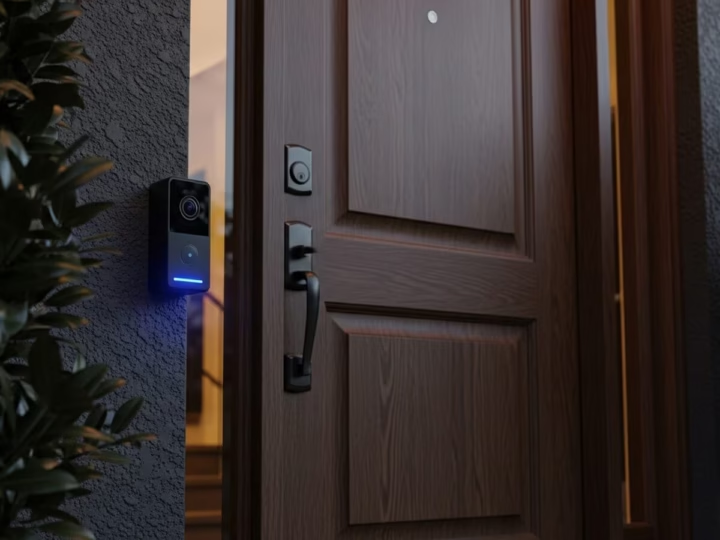
A smart security camera lets you check in remotely, get motion alerts, and — most importantly — review footage after the fact if something does happen while you’re away. Even a single camera covering the main entrance makes a real difference.
Things to check before you leave:
- Battery or power supply is fully charged or connected reliably
- Motion detection zones are set correctly, so you’re not flooded with alerts from passing traffic
- Cloud storage or local SD card has enough free space for the whole trip
- The app is actually working on your phone before you leave, not something you discover is broken from another country
[link to related guide on choosing a smart doorbell camera here]
If your budget doesn’t stretch to a full camera setup, even a basic ₹1,500-2,500 wifi camera pointed at the main door adds real value. It’s not about surveillance overkill — it’s just one more layer.
Lock Down Your Digital and Social Media Presence
This one gets overlooked constantly, and it probably shouldn’t.
Posting “Landed in Bali!” the moment you touch down basically announces your house is empty, to anyone who can see it — including people outside your close friend circle if your privacy settings are loose.
A few things worth doing:
- Wait until you’re back home to post vacation photos, or at least delay them by a few days
- Check your location-sharing settings on apps like Instagram and Google Maps
- Avoid mentioning exact travel dates publicly, even in a casual caption
- Turn off “away” auto-replies on email if they reveal specific dates you’ll be gone
I know this sounds a little paranoid, and maybe it is. But I’ve read enough local news stories about burglaries timed around social media posts to take it seriously now.
Double-Check Your Home Alarm and Security System
If you already have an alarm system installed, don’t assume it’s ready just because it usually works.
Test it a day or two before leaving, not the morning of. Check the battery backup, confirm the monitoring service (if you’re paying for one) has your correct travel dates and updated emergency contacts. A false assumption here is worse than having no system at all, because it creates a false sense of security.
For homes without a monitored alarm, even a basic motion-sensor alarm for around ₹800-1,500 that sounds locally can be a decent deterrent, paired with the camera setup mentioned earlier.
[link to related guide on home alarm systems comparison here]
Last-Minute Vacation Security Checklist
Here’s a quick rundown for the night before you leave — the stuff that’s easy to forget in the rush.
- Unplug non-essential electronics (reduces both fire risk and electricity waste)
- Turn off the main gas supply if you won’t have anyone checking the house
- Lock all windows, not just the ones you use daily
- Confirm your neighbor or family member has your itinerary and emergency contact
- Set timers for lights and any smart devices
- Take a final walk-through of the house before locking the main door
Small stuff, honestly. But skipping even two or three of these is usually how people end up with a story that starts with “we came back and…”
Frequently Asked Questions
How far in advance should I start my home security checklist for vacation? About 3-4 days before you leave is ideal. That gives you time to stop newspaper deliveries, test your camera or alarm setup, and arrange things with a neighbor without rushing the night before your flight.
Is it safe to post vacation photos on social media while traveling? It’s riskier than most people think, especially if your profile isn’t fully private. Delaying posts until you’re back, or at least a few days into the trip, is a simple habit that removes an obvious signal that your house is empty.
Do I really need a smart camera if I have good locks already? Locks stop entry, but they don’t tell you what happened if something goes wrong. A camera adds visibility and evidence, which locks alone can’t give you. They work best together, not as a substitute for one another.
Should I tell my building’s security guard I’m going on vacation? Yes, absolutely, if your building has one. It costs nothing and adds another set of eyes on your home. Just be selective about who else you mention it to outside trusted people.
What’s the most commonly forgotten item on a vacation security checklist? Stopping newspaper or mail delivery, by far. People remember the big stuff like locking doors but forget the smaller signals that pile up and give away an empty house within days.
Is it worth getting a monitored alarm system just for occasional trips? If you travel often, yes, it usually pays off. For a once-a-year trip, a combination of good locks, a basic camera, and a trusted neighbor covers most of the risk without the ongoing monitoring cost.
Conclusion
A solid home security checklist for vacation doesn’t need to be complicated or expensive. Lock every entry point, stop deliveries from piling up, set a few light timers, and get a trusted person keeping an eye on things. Add a basic camera if you can, and think twice before posting your travel plans online.
Do this a few days before your next trip, not the night before, and you’ll actually get to relax on vacation instead of wondering what’s happening back home.